
On this page
Key takeaways
- Water dripping from a small pipe outside, near the outdoor unit or the foundation, is usually normal. That’s the condensate drain doing its job.
- Water inside, around the indoor unit or on a ceiling, is a problem. Turn the system off at the thermostat first.
- Most indoor leaks come from a clogged condensate drain, a cracked or rusted pan, or a frozen coil.
- A float switch that shuts the AC off is protecting your ceiling, not failing.
Where does AC water come from?
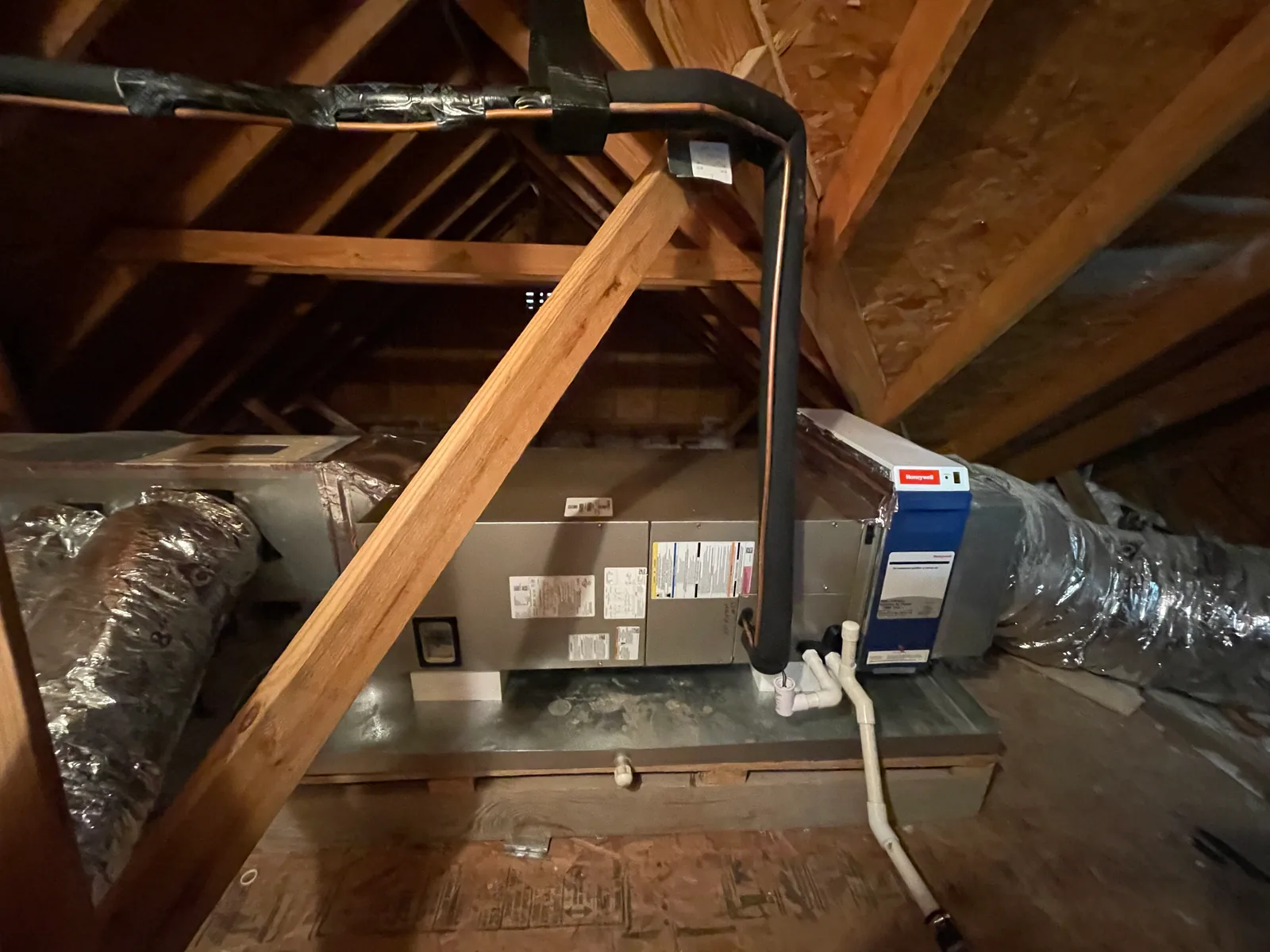
On a humid day, your air conditioner pulls a surprising amount of water out of the air. That water collects on the cold indoor coil, drips into a pan and leaves through a drain line, usually a white or gray plastic pipe. When everything works, you never notice it. When the path is blocked, the water has to go somewhere.
Indoor coil
Moisture condenses here while the AC runs.
Primary drain pan
Built into the unit. It catches water from the coil.
Primary drain line
Carries water outside or to a plumbing drain. Many lines include a U-shaped trap that helps the water drain properly.
Float switch
A safety switch that turns the AC off if water backs up.
Secondary drain pan
The backup pan under attic units. Its drain often ends somewhere you’ll notice, such as above a window.
Where the main drain ends
Often a small pipe outside near the foundation. Dripping here on a hot day is normal.
Found water? Do this first
Turn the system off
Set the thermostat to OFF. This stops the coil from making more water.
Protect your things
Move valuables, put towels or a bucket under drips, and soak up standing water with a wet/dry vacuum.
Check the ceiling
If a ceiling is sagging with water, keep people out from under it. If it’s bulging, a small hole at the lowest point over a bucket lets the water out in a controlled way.
Look at the indoor unit
If you can reach it safely, check the pan under the unit and look for ice on the coil or the copper lines.
Book a visit
A clogged drain is often a quick fix, but water damage gets worse with time.
Find what’s causing your leak
Interactive tool
AC leak locator
Pick the spot that matches what you see. We’ll explain what it likely means and what to do next.
Question 1
Where do you see the water?
How to prevent AC leaks
- Change the air filter on schedule. A clogged filter can freeze the coil.
- Have the drain flushed during seasonal maintenance.
- Ask whether your attic unit has a float switch. It’s a small part that can save a ceiling.
- Keep the outside end of the drain line clear.
- Know where your secondary drain ends, and glance at it now and then during the summer.
Common questions
Sources
We checked the facts in this guide against these public sources.
- U.S. Department of Energy — Maintaining your air conditioner
- ENERGY STAR — Heating and cooling maintenance checklist
- EPA — A brief guide to mold, moisture and your home
This guide is general information for homeowners, not a diagnosis of your system. If you smell gas or a carbon monoxide alarm sounds, leave the house and call 911 or your gas utility first.