
On this page
Key takeaways
- Check your filter every month during heavy use and change it at least every 3 months, as ENERGY STAR recommends.
- Shop by the size printed on the frame, such as 20x25x1. It’s a rounded size, so your tape measure will read slightly smaller.
- The EPA suggests MERV 13 or as high as your system can handle. If you’re unsure, ask first, because a filter that’s too restrictive can reduce airflow.
- Pets, allergies, construction dust and nonstop summer run times all mean more frequent changes.
What your filter actually does
The filter’s first job is protecting your equipment. It catches dust and debris before they coat the blower and the indoor coil. A dirty coil can’t absorb heat well, and a clogged filter starves the system of air. Its second job is cleaner air in your home, which depends on the filter’s rating.
Find your filter
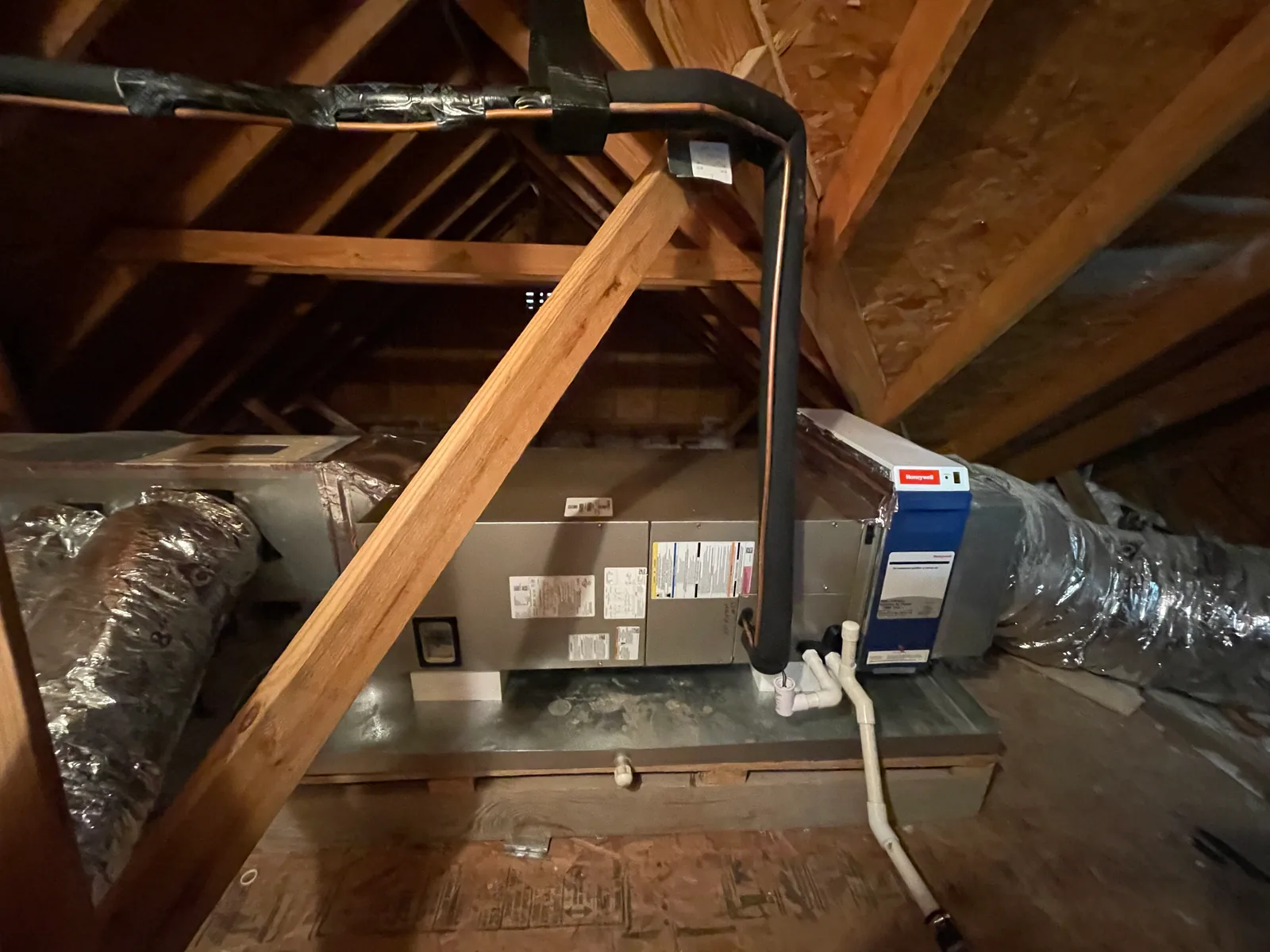
Look for a grille on a wall or ceiling inside the house that pulls air in, or for a slot or cabinet beside the indoor unit. Some homes have more than one return, and each may hold a filter. If your system has a thick filter in a cabinet at the unit, the grilles may have none.
Read the label correctly
Nominal size
The rounded size in large type, like 20x25x1. Shop by this number.
Actual size
Often printed smaller. Filters are made a little under the nominal size so they slide in.
Airflow arrow
Points the way air moves. Install it pointing toward the equipment, away from the room.
MERV rating
How well the filter catches small particles. Higher numbers catch more.
Date you installed it
Write it on the frame so you know when the next change is due.
Plan your filter changes
Interactive tool
Filter planner
Answer two quick questions for a starting schedule and a rating to ask about.
This is a starting point, not a rule. Your filter or equipment manufacturer’s instructions come first.
Suggested schedule
Replace about every 2 months
Check it monthly anyway. If it looks gray and clogged sooner, change it sooner.
Rating to ask about
A MERV 8 to 11 pleated filter is a common choice. It protects the equipment and catches everyday dust and pollen.
What MERV numbers mean
| MERV | Typically catches | A good fit for |
|---|---|---|
| 1 to 4 | Pollen, dust mites and carpet fibers | Basic equipment protection |
| 5 to 8 | Mold spores, pet dander and household dust | Most homes |
| 9 to 12 | Finer dust and particles such as car exhaust | Homes with pets or allergies |
| 13 to 16 | Smaller particles, including some bacteria and smoke | Allergies, asthma or smoke, if your system can handle it |
How to change a filter in two minutes
Turn the system off
Set the thermostat to OFF so the blower doesn’t pull dust in while the slot is open.
Slide out the old filter
Note which way the arrow points and the size printed on the frame.
Check the slot
Vacuum or wipe any dust around the opening.
Insert the new filter
Arrow pointing toward the equipment, away from the room. Make sure it sits flat with no gaps around the edges.
Write the date on it
Then turn the system back on.
Common questions
Sources
We checked the facts in this guide against these public sources.
- ENERGY STAR — Heating and cooling maintenance checklist
- U.S. Department of Energy — Maintaining your air conditioner
- EPA — What is a MERV rating?
- EPA — Guide to air cleaners in the home
This guide is general information for homeowners, not a diagnosis of your system. If you smell gas or a carbon monoxide alarm sounds, leave the house and call 911 or your gas utility first.